
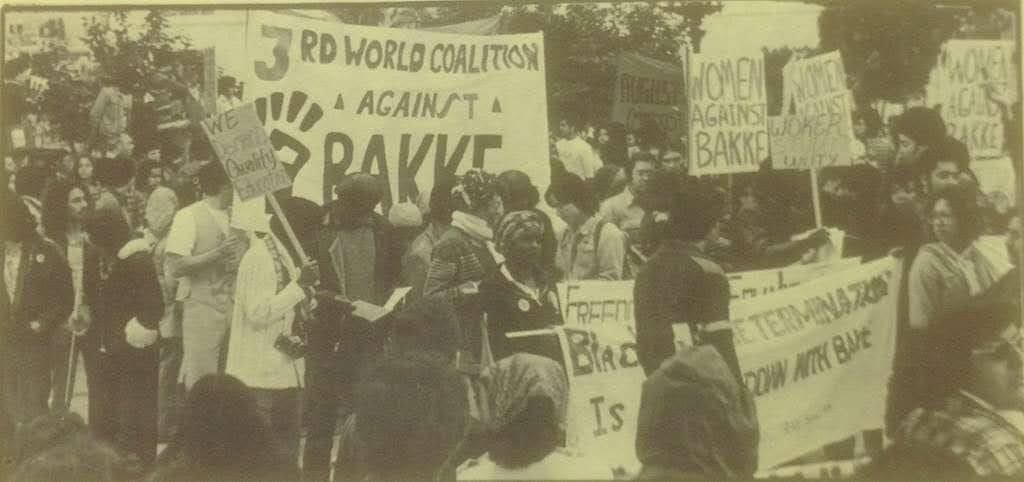
Introduction
Regents v. Bakke (1978) was a significant Supreme Court case that brought the issue of affirmative action to the forefront of American legal and social discourse. The case revolved around the admissions policy of the University of California, Davis School of Medicine, which used race as a factor in determining admissions. This essay will delve into the details of the case, including the issue at hand, the analysis conducted by the Court, the ultimate conclusion reached, and the far-reaching impact of the decision.
Issue & Rule
The central issue in Regents v. Bakke was whether the use of racial quotas in college admissions violated the Equal Protection Clause of the Fourteenth Amendment to the United States Constitution. The rule established by the Court in this case was that while the use of race as one factor in admissions decisions was permissible, strict racial quotas were unconstitutional.
Analysis and Conclusion
In the analysis of the case, the Court found that the University's admission policy, which set aside a fixed number of seats for minority applicants, violated the rights of Allan Bakke, a white applicant who was denied admission despite his qualifications. The majority opinion, written by Justice Lewis F. Powell Jr., emphasized that diversity was a compelling state interest that could be pursued by universities, but racial quotas were not the appropriate means to achieve it. The Court concluded that the use of racial quotas constituted unlawful discrimination and violated the Equal Protection Clause.
Impact
The decision in Regents v. Bakke had a profound impact on affirmative action policies across the nation. By invalidating strict racial quotas, the Court's ruling introduced a new standard for evaluating affirmative action programs. It allowed universities to consider race as a factor in admissions decisions, but only as part of a holistic review process and without the use of rigid quotas. This decision had significant implications for educational institutions, public and private employers, and government agencies, shaping their approach to promoting diversity and equal opportunity.
References
- Bollinger, L. C., & Gonzalez, S. J. (Eds.). (2003). The Bakke Case: Race, Education, and Affirmative Action. University Press of Kansas.
- Davis, D. B. (1991). Justice in the Shadow of "Law": Bakke and the Legal Triumph of Affirmative Action. The Journal of American History, 78(4), 1265-1291.
- Farley, J. E. (2019). Majority-Minority Relations. Pearson.