Introduction
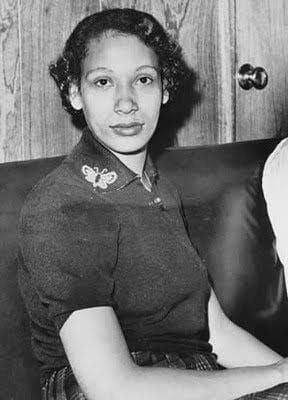
Loving v. Virginia was a Supreme Court case that struck down state laws banning interracial marriage in the United States. Richard, a white construction worker, and Mildred, a woman of mixed African American and Native American ancestry, were longtime friends who had fallen in love. In June 1958, they exchanged wedding vows in Washington, D.C., where interracial marriage was legal, and then returned home to Virginia. On July 11, 1958, just five weeks after their wedding, the Lovings were woken in their bed at about 2:00 a.m. and arrested by the local sheriff. Richard and Mildred were indicted on charges of violating Virginia’s anti-miscegenation law, which deemed interracial marriages a felony. When the couple pleaded guilty the following year, Judge Leon M. Bazile sentenced them to one year in prison, but suspended the sentence on the condition that they would leave Virginia and not return together for a period of 25 years.
Issue & Rule
The central issue in Loving v. Virginia was whether Virginia's anti-miscegenation law violated the Equal Protection Clause of the Fourteenth Amendment. Virginia, like many other states, had laws in place that restricted marriage between individuals of different races. The Loving case was a challenge to centuries of American laws banning miscegenation, i.e., any marriage or interbreeding among different races. By the 1950s, more than half the states in the Union—including every state in the South—still had laws restricting marriage by racial classifications. In Virginia, interracial marriage was illegal under 1924’s Act to Preserve Racial Integrity. Those who violated the law risked anywhere from one to five years in a state penitentiary. The question before the Supreme Court was whether these laws were constitutional and upheld the principles of equal protection under the law.
Earlier attempts to challenge race-based marriage bans in court had not been successful. Notably, the Supreme Court's 1883 ruling in Pace v. Alabama had upheld the constitutionality of an Alabama anti-miscegenation law, arguing that it equally punished both Black and white individuals. Furthermore, in 1888, the Supreme Court had established that states possessed the authority to regulate marriage. These precedents had maintained the legality of race-based marriage restrictions for several decades.
Conclusion
On June 12, 1967, the Supreme Court delivered its unanimous ruling in Loving v. Virginia. Chief Justice Earl Warren authored the opinion, declaring Virginia's anti-miscegenation law unconstitutional under the Fourteenth Amendment. “Under our Constitution, the freedom to marry, or not marry, a person of another race resides with the individual, and cannot be infringed by the state,” Chief Justice Earl Warren wrote. The Court held that distinctions drawn according to race were generally "odious to a free people" and were subject to "the most rigid scrutiny" under the Equal Protection Clause. The Virginia law, the Court found, had no legitimate purpose "independent of invidious racial discrimination." The Court rejected the state's argument that the statute was legitimate because it applied equally to both blacks and whites and found that racial classifications were not subject to a "rational purpose" test under the Fourteenth Amendment. The Court also held that the Virginia law violated the Due Process Clause of the Fourteenth Amendment.
Impact
The landmark ruling not only overturned the Lovings’ 1958 criminal conviction, it also struck down laws against interracial marriage in 16 U.S. states including Virginia. Despite the court’s decision, however, some states were slow to alter their laws. The last state to officially accept the ruling was Alabama, which only removed an anti-miscegenation statute from its state constitution in 2000. The impact of Loving v. Virginia extended beyond interracial marriage, serving as a legal precedent for subsequent cases related to same-sex marriage. In 2015, for example, Justice Anthony Kennedy cited the Loving case in his opinion on the Supreme Court case Obergefell v. Hodges, which legalized gay marriage across the United States. The anniversary of the Loving v. Virginia decision, June 12th, is now commemorated each year as “Loving Day,” a holiday celebrating multiracial families.
Learn more about the case
- "What You Didn’t Know About Loving v. Virginia" (Time Magazine Article)
- "A Loving Reality for All" (ACLU Article)
- "Loving Decision: 40 Years of Legal Interracial Unions" (NPR Article)
- "Loving" (2016 Jeff Nichols Film)
References
- A Loving Reality for All. American Civil Liberties Union, www.aclu.org/issues/racial-justice/race-and-the-law/loving-v-virginia-loving-day.
- “Loving Decision: 40 Years of Legal Interracial Unions”. NPR, https://www.npr.org/2007/06/11/10889047/loving-decision-40-years-of-legal-interracial-unions
- "Loving v. Virginia." Oyez, www.oyez.org/cases/1966/395.
- "Loving v. Virginia (1967)." History.com, www.history.com/topics/civil-rights-movement/loving-v-virginia.
- What You Didn’t Know About Loving v. Virginia. Time, time.com/3972590/loving-virginia-50-anniversary.