
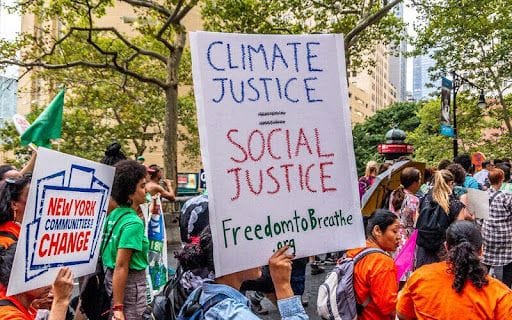
Benjamin Chavis & the Environmental Movement
Environmental racism is a concept that emerged as a result of the disproportionate burden of environmental hazards on communities of color. Coined by Benjamin Chavis in 1982, it refers to the racial discrimination inherent in environmental policy-making, enforcement of regulations, and the deliberate targeting of minority communities for toxic waste facilities. Chavis highlighted the historical exclusion of people of color from leadership positions in environmental movements, as well as the presence of life-threatening pollutants in their communities. This term shed light on the systemic nature of environmental injustice and became a rallying point for marginalized communities.
The environmental racism movement gained momentum after a significant event in Warren County, North Carolina, in 1982. A predominantly African-American community was chosen as the site for a hazardous waste landfill to dispose of PCB-contaminated soil resulting from illegal toxic waste dumping. Despite alternative options, the state decided to locate the landfill in this minority community. This sparked outrage and led to protests against the targeting of poor minority communities for environmental burdens. People in these communities formed groups to fight against industries that threatened their environment and caused high rates of environmental illness.
In 1991, the First National People of Color Environmental Leadership Summit was convened to address the issue of environmental justice on a national level. This summit aimed to draw attention to the practice of targeting minority communities for hazardous waste treatment and disposal facilities. It emphasized the importance of communication and collaboration among communities affected by environmental racism and laid the groundwork for a growing environmental justice movement. In response to these efforts, Executive Order 12898 was issued, directing federal agencies to incorporate environmental justice into their decision-making processes. The executive order focused on improving the health and environmental conditions in minority, tribal, and low-income communities and aimed to achieve environmental justice and nondiscrimination in programs impacting human health and the environment.
Environmental Racism in our Communities
Environmental racism manifests in predominantly Black and brown communities through various forms of pollution and toxic waste, leading to detrimental health effects and social injustices. Water contamination, exemplified by the Flint water crisis in Michigan, disproportionately affects these communities. In 2014, the city switched its water source to the Flint River without adequate treatment, exposing the majority-Black population to dangerous levels of lead and other contaminants. Residents' complaints were dismissed for months until community pressure forced action. The incident highlighted the dismissive treatment of environmental concerns in marginalized communities.
Air pollution also contributes to environmental racism, with neighborhoods like Harlem and the South Bronx in New York City experiencing high asthma rates. Racial disparities in exposure to air pollution persist despite overall reductions. Research indicates that racial minorities bear a disproportionate burden of emissions tied to consumption, emphasizing the need for policies that address pollution in the most affected communities. The inequities in air pollution further perpetuate the health disparities experienced by these communities.
Oil and gas operations pose another environmental injustice. Pregnant women living near active high-production wells face an increased risk of having low birth-weight babies and infants with reduced fetal growth. Studies show that proximity to such wells raises the likelihood of adverse birth outcomes. In California, where 2.1 million residents live within a mile of active oil and gas wells, the public health impacts of these operations have not been thoroughly examined, highlighting the disregard for the well-being of nearby communities.
Toxic waste disproportionately affects Native tribes in the American West. Living near nuclear test sites, uranium mines, power plants, and toxic waste dumps exposes these communities to significant amounts of hazardous waste. The government and private companies have exploited Native American sovereignty and economic vulnerability by offering financial incentives to host nuclear waste storage sites. Decades of uranium mining on Navajo land have resulted in health problems and elevated levels of diseases such as lung cancer due to exposure to radon and radiation. These instances reveal the historic and ongoing disregard for Native communities' well-being and the economic racism perpetuated through toxic waste disposal.
In summary, environmental racism manifests in predominantly Black and brown communities through water contamination, air pollution, oil and gas operations, and toxic waste. These environmental injustices result in severe health burdens, economic disparities, and the violation of communities' rights to clean and safe environments. Addressing and rectifying these systemic inequalities requires comprehensive policies, community empowerment, and a commitment to environmental justice.
Combating & Acknowledging Environmental Racism
Environmental justice is an intergenerational, multi-racial, and international movement that advocates for the recognition of the direct link between economic, environmental, and health issues. It aims to promote environmental, economic, and social justice by demanding safe and clean community and workplace environments. Environmental justice encompasses cultural norms, rules, regulations, policies, and decisions that support sustainability and ensure equal access to resources and institutions, respecting both cultural and biological diversity. The principles of environmental justice emphasize the sacredness of the Earth, the interconnectedness of all species, and the right to be free from ecological destruction. It calls for public policy that is based on mutual respect, justice, and the elimination of discrimination or bias.
Acknowledging environmental racism is crucial in the context of climate justice. Globalization has increased opportunities for environmental racism on an international scale, where pollutants such as e-waste are dumped in the global south, taking advantage of lax safety laws and environmental practices. This form of environmental injustice perpetuates the unequal burden of pollution and health risks faced by marginalized communities. Furthermore, in the age of COVID-19, the higher instances of health complications such as asthma and heart disease resulting from exposure to pollution further highlight the need to address environmental racism. By recognizing and addressing environmental racism in the climate justice sphere, we can work towards equitable and sustainable solutions that protect the health and well-being of all communities, particularly those disproportionately affected by environmental hazards.
More Information
Organizations and articles for readers who want to do and learn more about environmental justice and environmental racism:
Organizations:
- The Climate Reality Project: This organization, founded by former Vice President Al Gore, aims to educate and mobilize people to take action on climate change. They provide resources, training, and campaigns to address climate justice issues and promote sustainable solutions.
- League of Conservation Voters (LCV): LCV works to elect environmental champions to public office in the United States. They advocate for policies that protect the environment and promote environmental justice. Their website offers information on candidates' environmental records and ways to get involved in supporting environmental justice initiatives.
- California Environmental Voters: This organization focuses on mobilizing voters in California to support environmentally friendly policies and candidates. They work to elect leaders who prioritize environmental justice and sustainable practices. Their website provides resources, voter guides, and information on campaigns and initiatives in California.
- Intersectional Environmentalist: Intersectional Environmentalist is a platform and community that advocates for the intersection of social justice and environmentalism. They aim to amplify marginalized voices and promote inclusivity in the environmental movement. Their website offers resources, educational materials, and a directory of organizations working on environmental justice.
Articles:
- "Dakota Access Pipeline protests": This article discusses the protests against the Dakota Access Pipeline, highlighting the environmental and social justice concerns raised by indigenous communities and activists.
- "Lead From Old U.S. Batteries Sent to Mexico Raises Risks": This article explores the issue of lead contamination resulting from the export of used batteries from the United States to Mexico, highlighting the environmental and health risks faced by communities involved in recycling these batteries.
- "Elevated Blood Lead Levels of Children in Guiyu, an Electronic Waste Recycling Town in China": This article sheds light on the environmental and health consequences of electronic waste recycling in Guiyu, China. It discusses the elevated blood lead levels in children and the impact of toxic waste on the local community.
- "Trump's EPA Concludes Environmental Racism Is Real": This article discusses the acknowledgment by the Environmental Protection Agency (EPA) during the Trump administration that environmental racism is a real issue. It examines the significance of this recognition and the implications for addressing environmental justice concerns.
- "10 Examples of Environmental Racism and How It Works": This article provides ten real-life examples of environmental racism, explaining how it operates and impacts marginalized communities. It offers insights into various instances of environmental injustice and raises awareness of the ongoing challenges faced by affected communities.
References
- "Environmental Justice History." U.S. Department of Energy, Office of Legacy Management. https://www.energy.gov/lm/services/environmental-justice/environmental-justice-history.
- Cavalieri, Alex. "The Complicated History of Environmental Racism." UNM Newsroom. http://news.unm.edu/news/the-complicated-history-of-environmental-racism.
- "What Is Environmental Racism and How Can We Fight It?" World Economic Forum. https://www.weforum.org/agenda/2020/07/what-is-environmental-racism-pollution-covid-systemic/.
- "Environmental Racism: What It Is and How You Can Fight It." The Climate Reality Project. https://www.climaterealityproject.org/blog/environmental-racism-what-it-and-how-you-can-fight-it.
- "Reservations about Toxic Waste: Native American Tribes Encouraged to Turn Down Lucrative Hazardous Disposal Deals." Scientific American. https://www.scientificamerican.com/article/earth-talk-reservations-about-toxic-waste/.
- "Minorities Breathe More Than Their Share of Polluted Air." Scientific American. https://www.scientificamerican.com/article/minorities-breathe-more-than-their-share-of-polluted-air/.
- "Living near Active Oil and Gas Wells in California Tied to Low Birth Weight and Smaller Babies." The Conversation. https://theconversation.com/living-near-active-oil-and-gas-wells-in-california-tied-to-low-birth-weight-and-smaller-babies-140034.
- "What Is Environmental Justice?" Greenaction for Health and Environmental Justice. https://greenaction.org/what-is-environmental-justice/.