Introduction
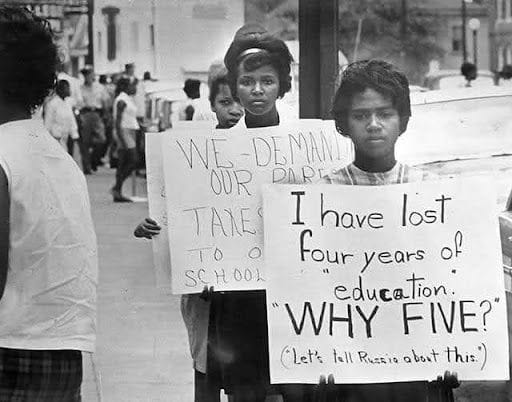
Brown v. Board of Education I, also known as Brown v. Board of Education of Topeka, was a groundbreaking case heard by the United States Supreme Court in 1954. It challenged the segregationist practices prevalent in American public schools, seeking to overturn the doctrine of "separate but equal" established by the 1896 case Plessy v. Ferguson. The decision in Brown v. Board of Education I marked a pivotal moment in the civil rights movement, laying the foundation for desegregation efforts and establishing a legal precedent for equal educational opportunities.
Issue & Rule
The central issue in Brown v. Board of Education I was whether racial segregation in public schools violated the Equal Protection Clause of the Fourteenth Amendment to the United States Constitution. The case questioned the constitutionality of state laws mandating separate educational facilities for black and white students. The Supreme Court was tasked with determining whether the "separate but equal" doctrine, which permitted racially segregated institutions as long as they were ostensibly equal in quality, was permissible under the Constitution.
The Court's rule, as stated in its unanimous decision, was that racial segregation in public education is inherently unconstitutional. Chief Justice Earl Warren, writing for the Court, declared that the doctrine of "separate but equal" had no place in the field of public education, as it perpetuated a sense of inferiority among black students and denied them equal educational opportunities. The Court held that segregation in schools solely based on race violated the Equal Protection Clause of the Fourteenth Amendment.
Analysis & Conclusion
In its analysis, the Court considered sociological and psychological evidence presented by the plaintiffs, highlighting the detrimental effects of segregation on the educational experiences and development of black students. The Court concluded that separate educational facilities were inherently unequal, as they could never provide an equal education due to the intangible aspects of segregation, such as the psychological impact on students' self-esteem and the perpetuation of racial stigma.
The decision in Brown v. Board of Education I overturned the precedent set by Plessy v. Ferguson and established a new legal framework for evaluating equal protection claims related to racial segregation. It initiated a process of desegregation in public schools, though the immediate implementation of the ruling faced significant challenges and resistance from some states and localities.
Impact
The impact of Brown v. Board of Education I was far-reaching and transformative. The ruling paved the way for subsequent cases that challenged segregation in other spheres of public life. It served as a catalyst for the broader civil rights movement and inspired activists to seek equality and justice in all aspects of American society. The decision had profound implications for educational policies and practices, leading to the dismantling of segregated schooling systems across the country.
Furthermore, Brown v. Board of Education I inspired other marginalized groups to fight against discrimination, emphasizing the importance of equal treatment and access to quality education for all. The case's legacy resonates to this day, reminding us of the ongoing struggle for equality and the power of legal advocacy in effecting social change.
References
- Kluger, Richard. "Simple Justice: The History of Brown v. Board of Education and Black America's Struggle for Equality." Vintage, 2004.
- Patterson, James T. "Brown v. Board of Education: A Civil Rights Milestone and Its Troubled Legacy." Oxford University Press, 2002.
- Tushnet, Mark V. "Making Civil Rights Law: Thurgood Marshall and the Supreme Court, 1936-1961." Oxford University Press, 1997.